New Front Step, Sidewalk, and Garage Approach Poured Clean
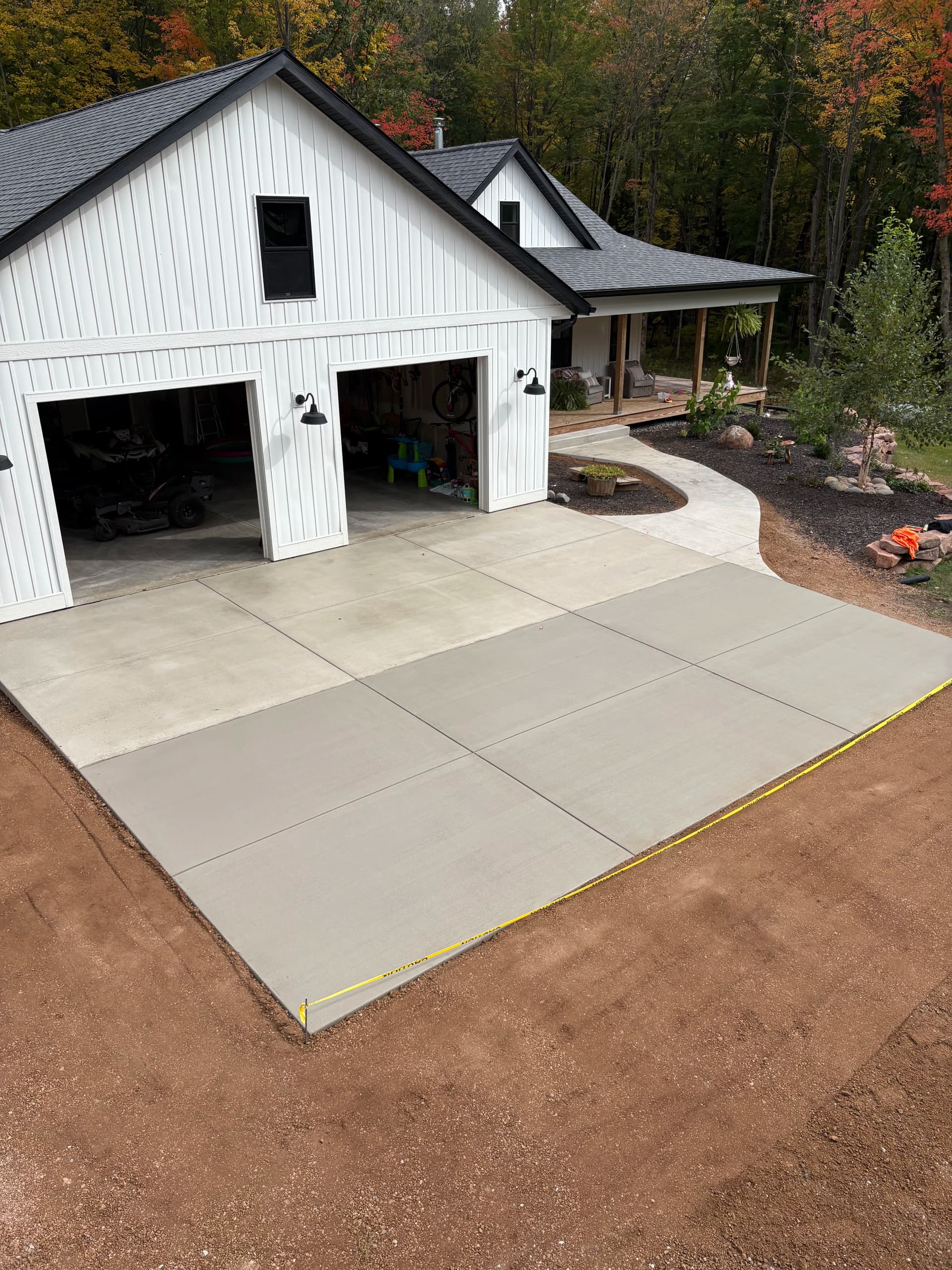
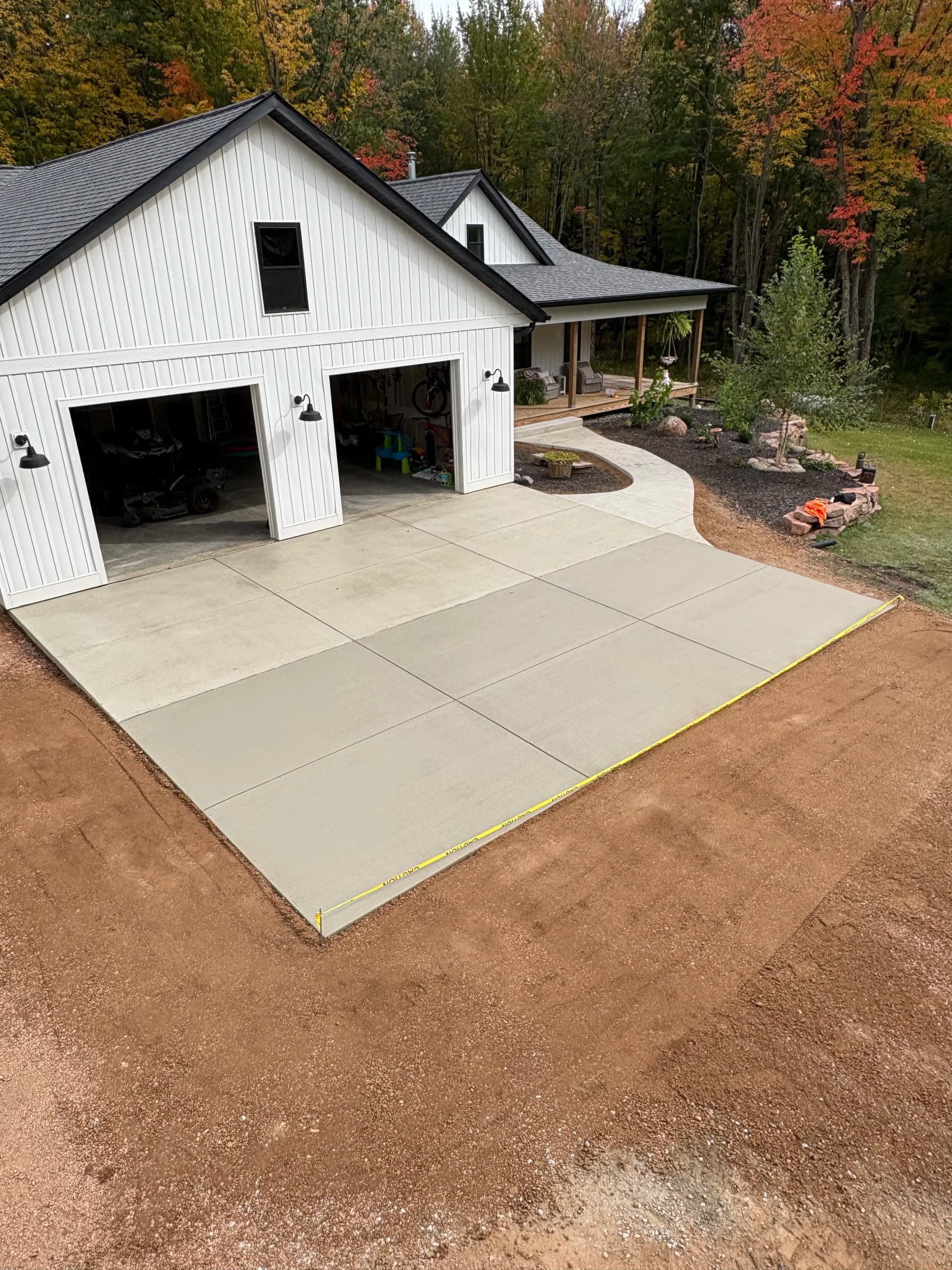
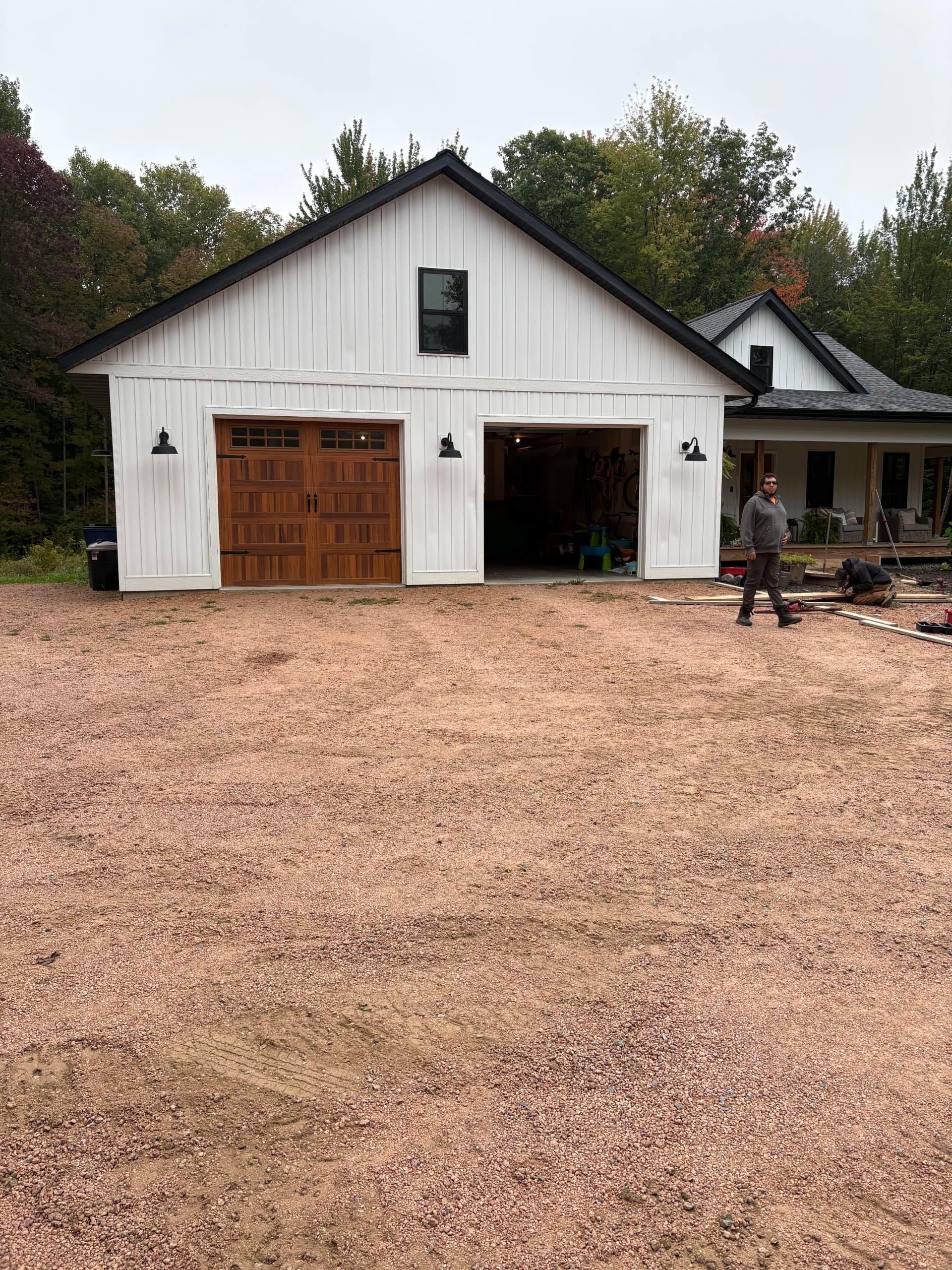
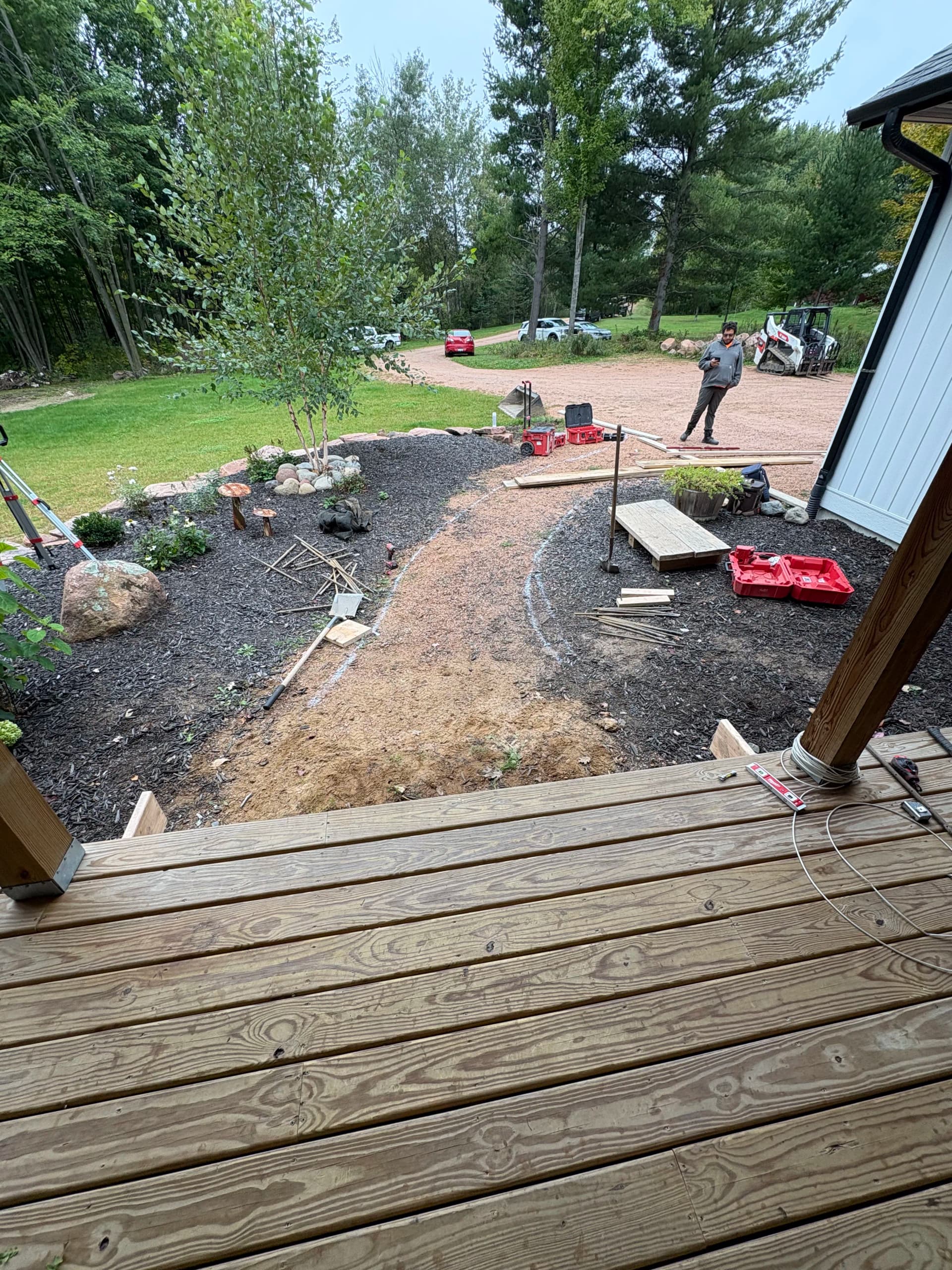
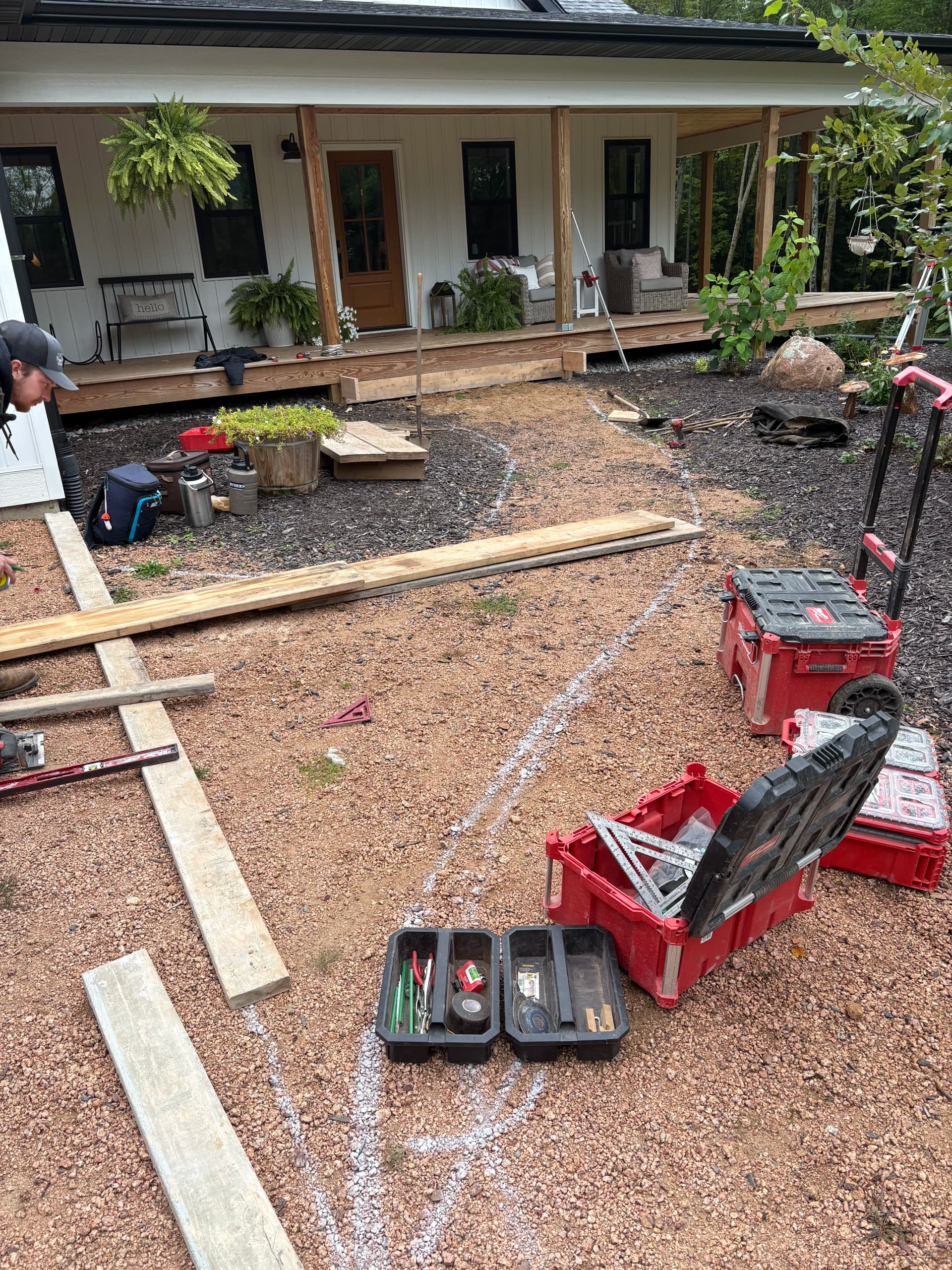
Here's what we were working with - a bare gravel area in front of a double garage and no real walkway connecting the front door to the rest of the property. The kind of setup that works fine until you actually want something that looks finished and holds up long-term. That's where we came in.
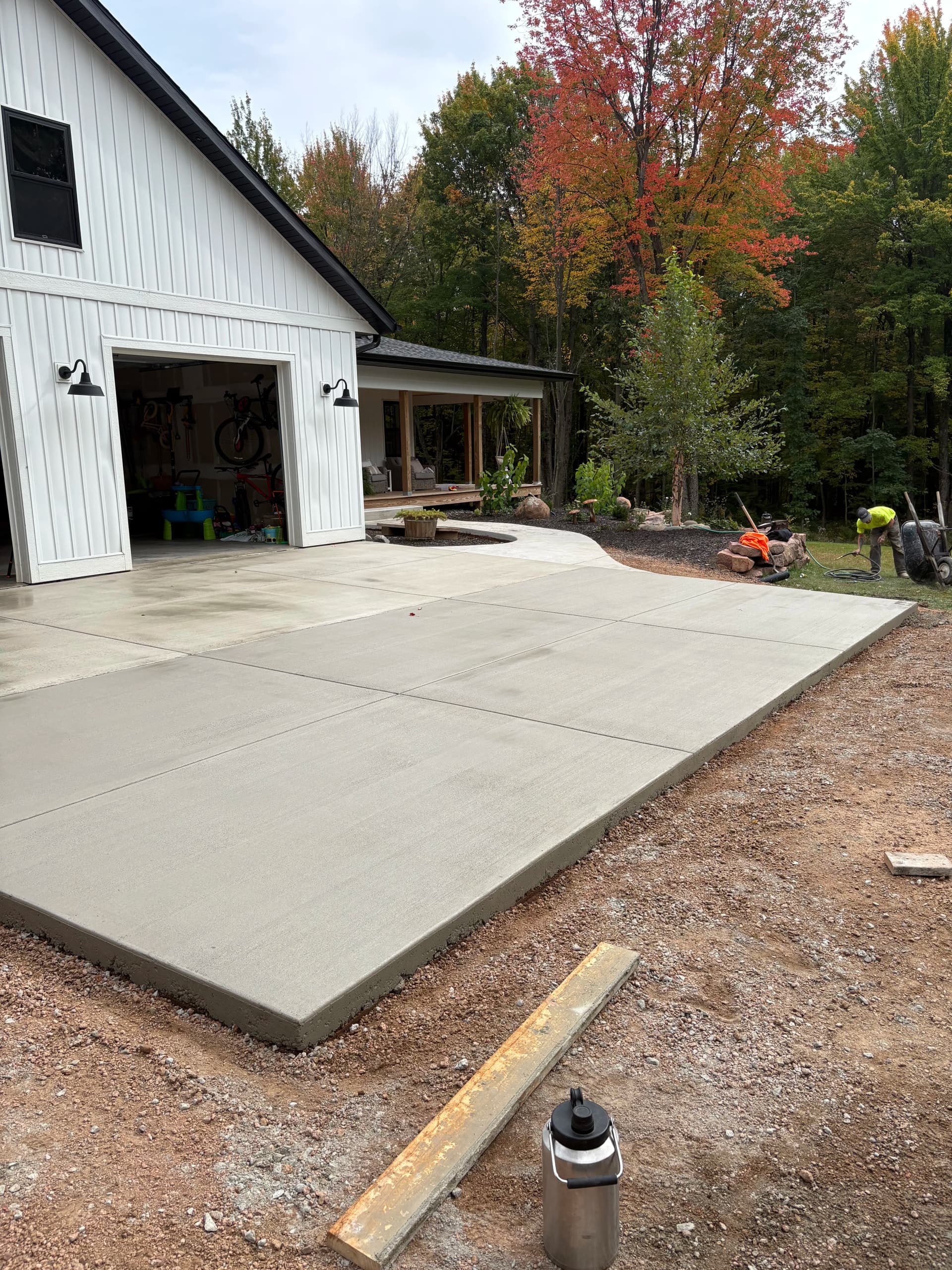
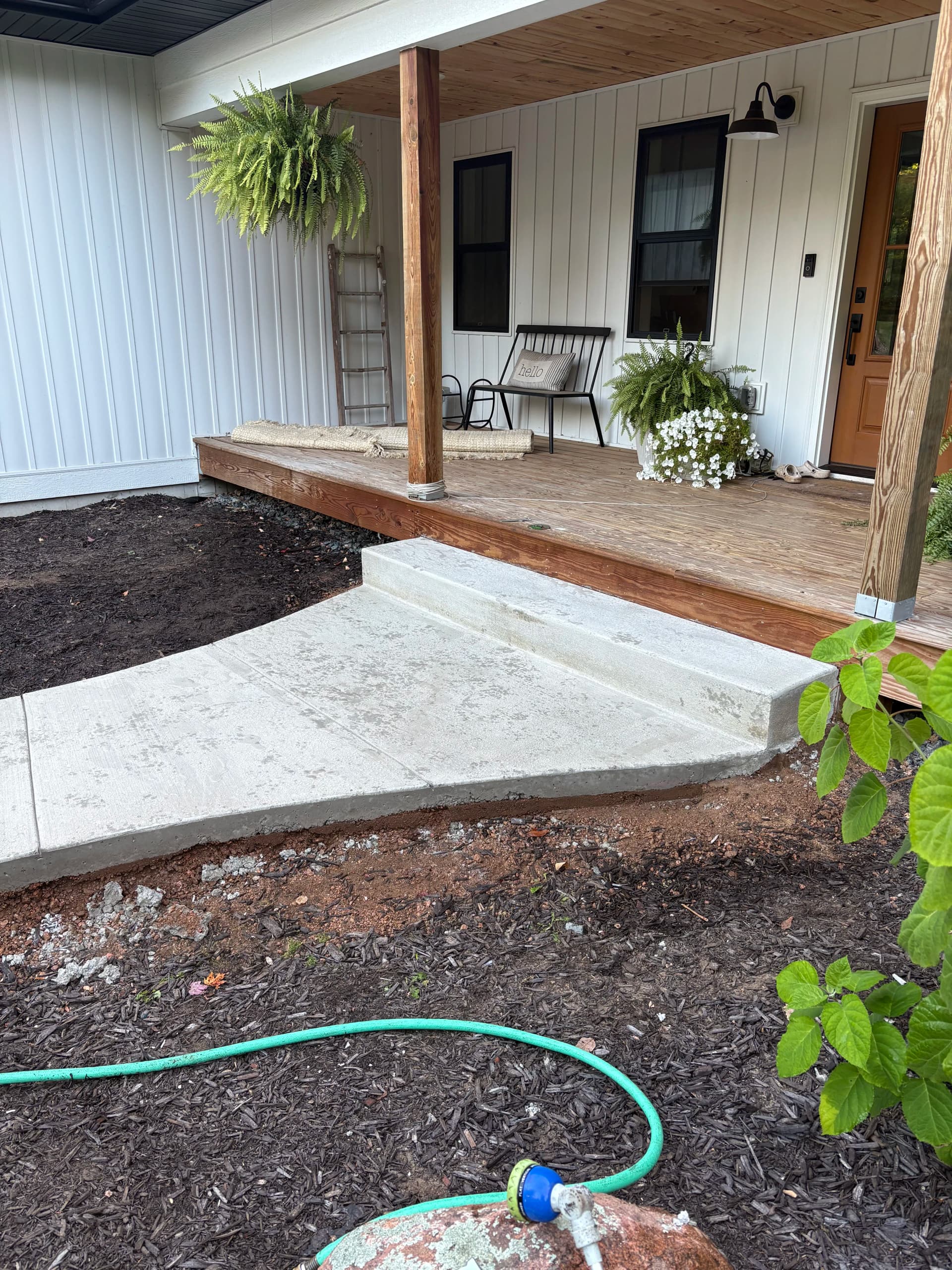
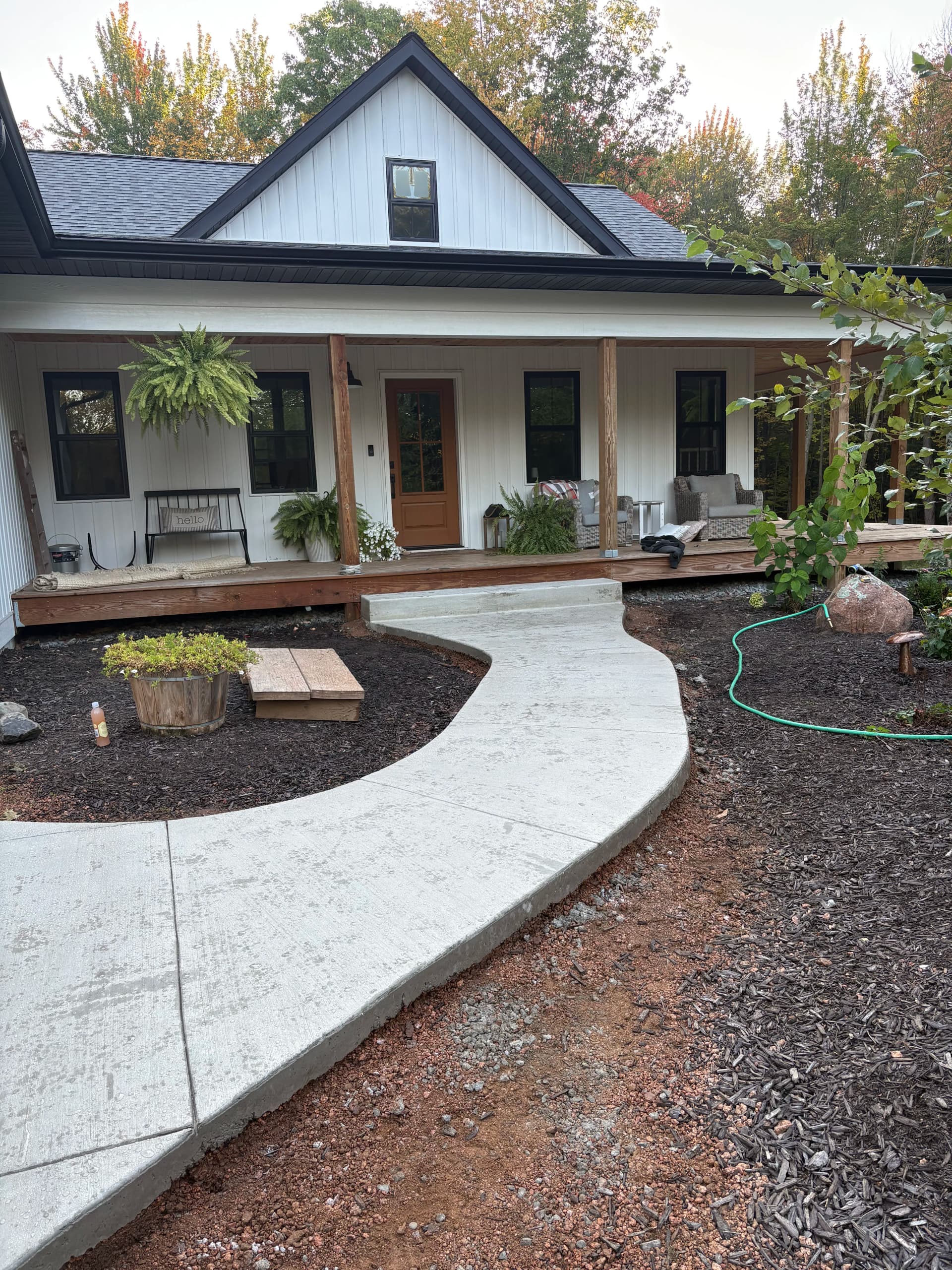
We poured a new garage approach, a front step, and a sweeping curved sidewalk to tie everything together. The approach was poured in two separate halves. That's not the fastest way to do it, but it gave us way more control over the finish. When you're working with a slab that wide, splitting the pour means you can actually get in there and work the surface properly instead of rushing before it sets up on you.
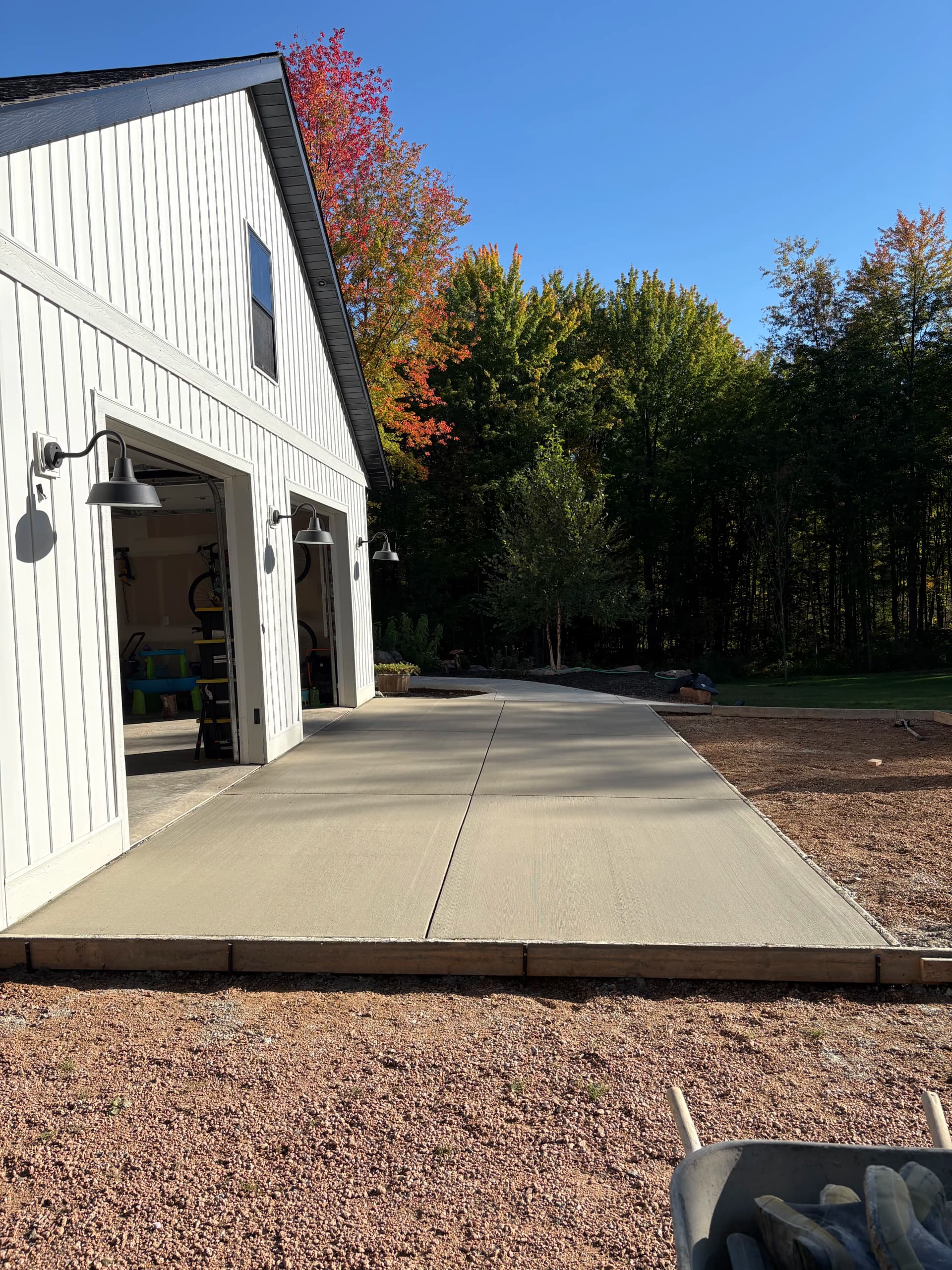
The sidewalk follow a curved layout that pulls the eye from the driveway right up to the front porch - clean broom finish, tight control joints, sharp edges all the way around. The step connects the sidewalk to the existing deck without any awkward transitions. Everything reads as one cohesive system, not three separate pieces bolted together.
The before shots tell the whole story - gravel, spray-painted layout lines, lumber forms being set. A lot of planning goes into concrete work before a single truck shows up. Getting the grades right, setting the forms level, making sure the curved sidewalk flows naturally. That groundwork is what separates a pour that looks good on day one from one that still looks good ten years from now.
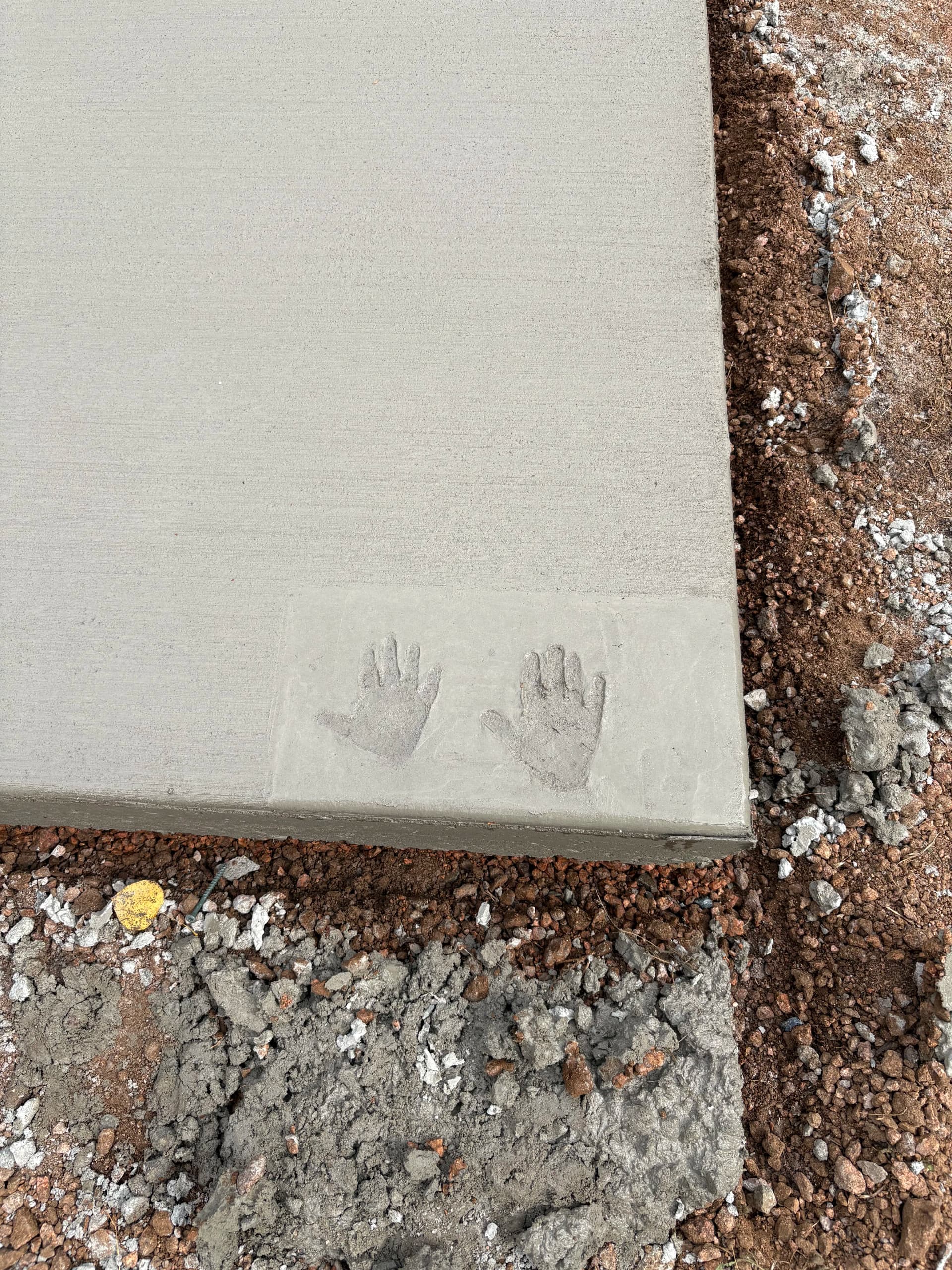
One of the crew left a little mark on the corner of the slab - a pair of handprints pressed into the fresh concrete. It's a small thing, but it's the kind of detail that sticks around. Good concrete flatwork should do the same.