Cracked Concrete Driveway Replaced With Reinforced Flatwork
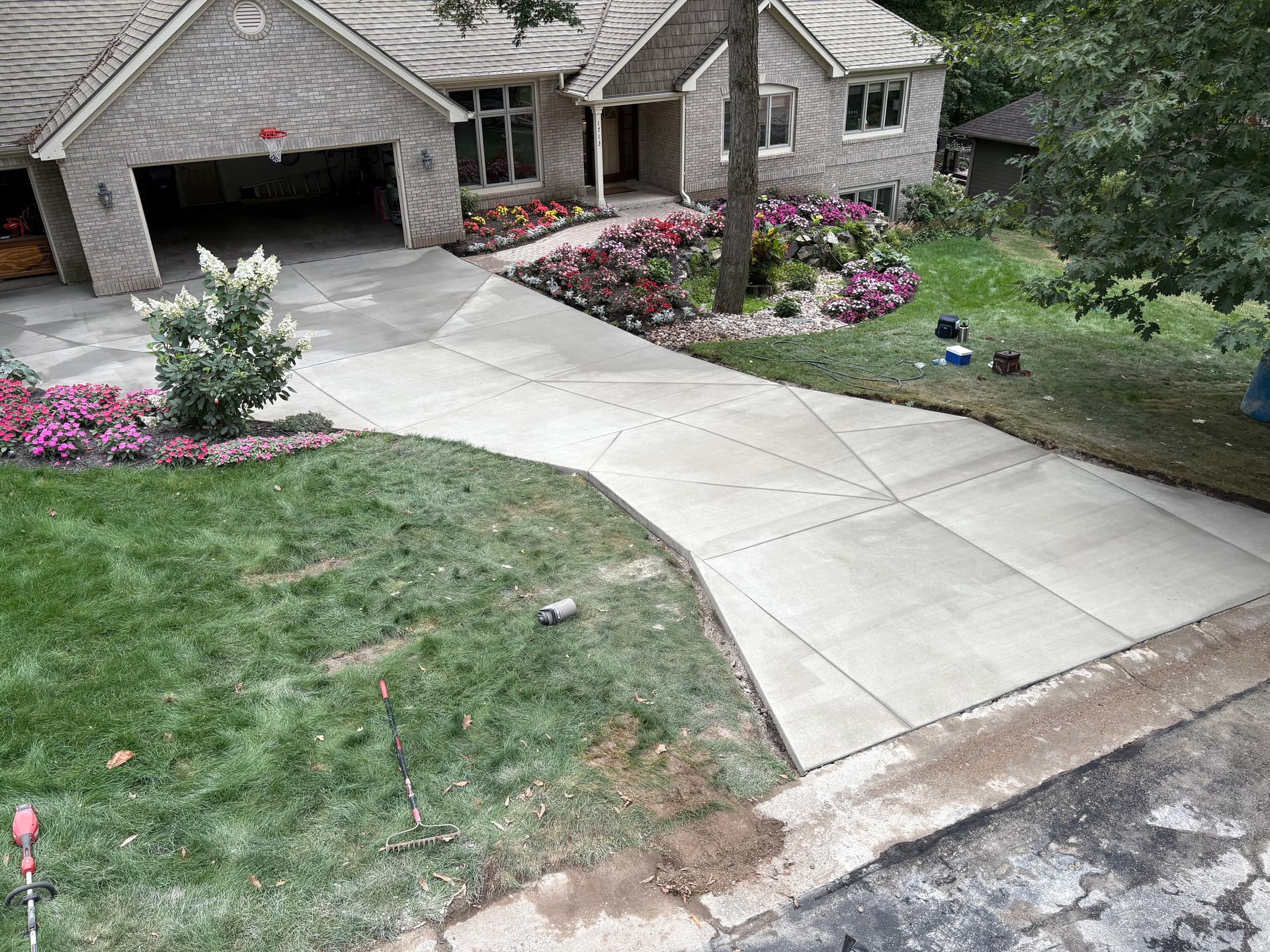
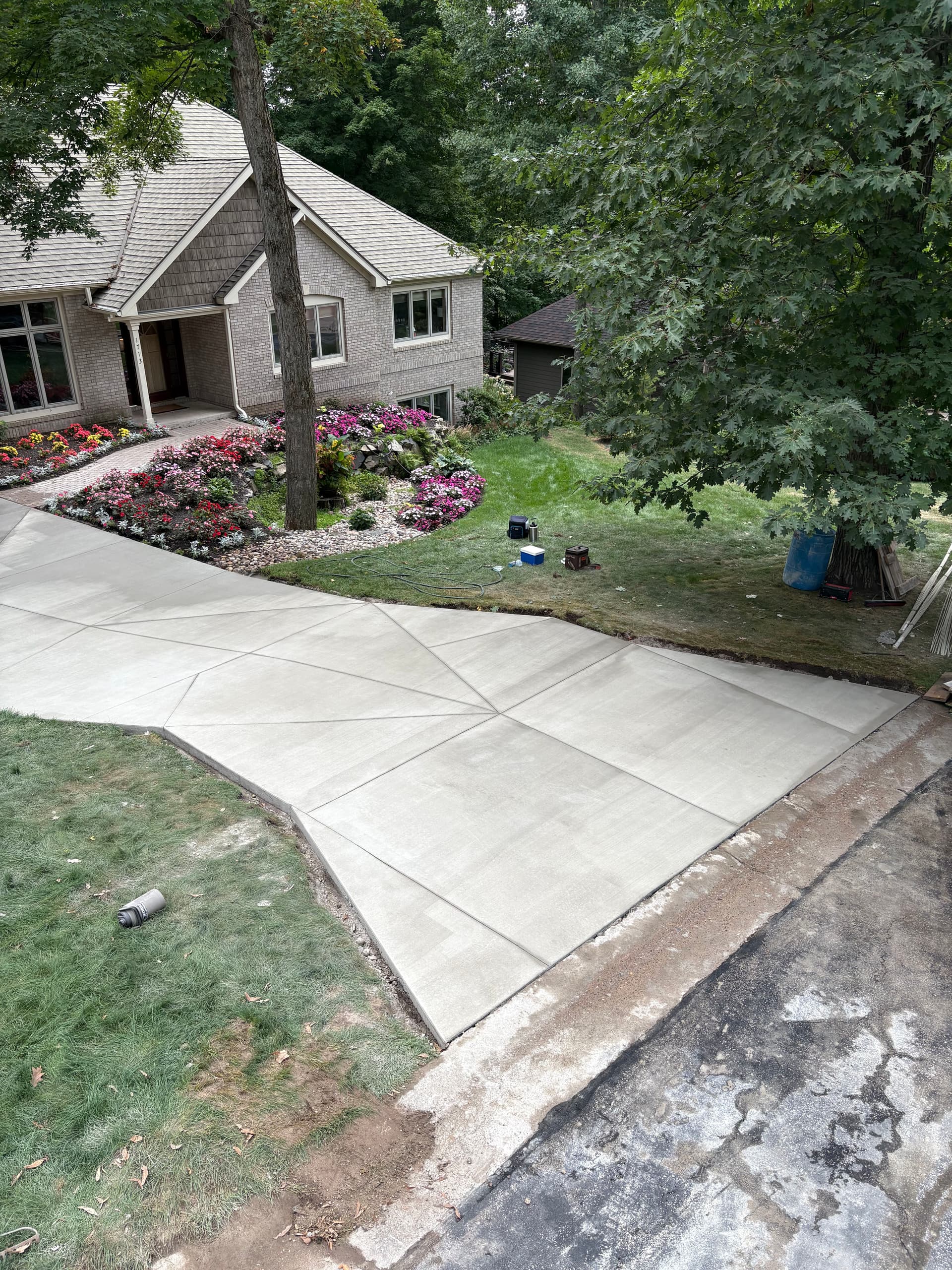
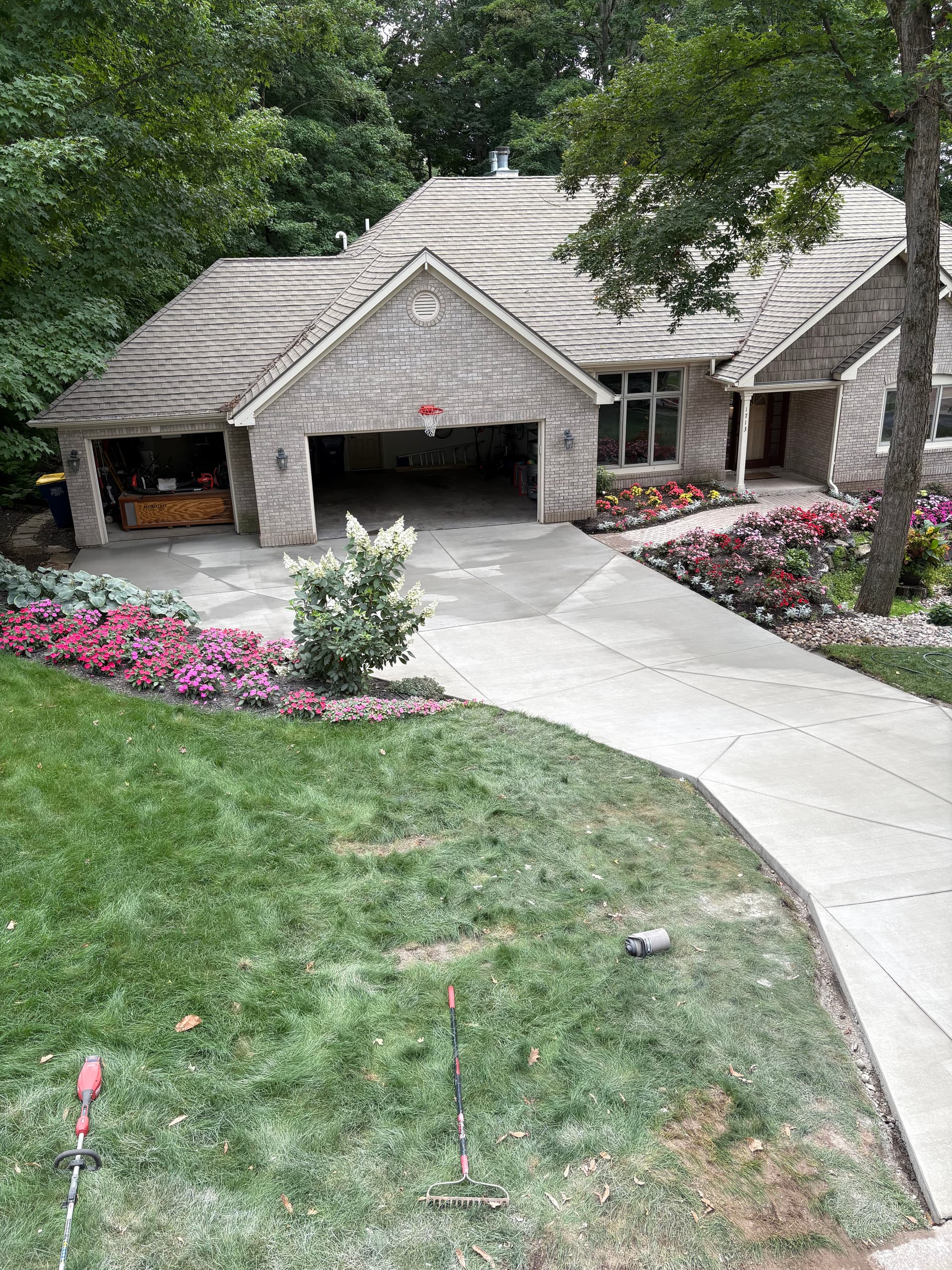
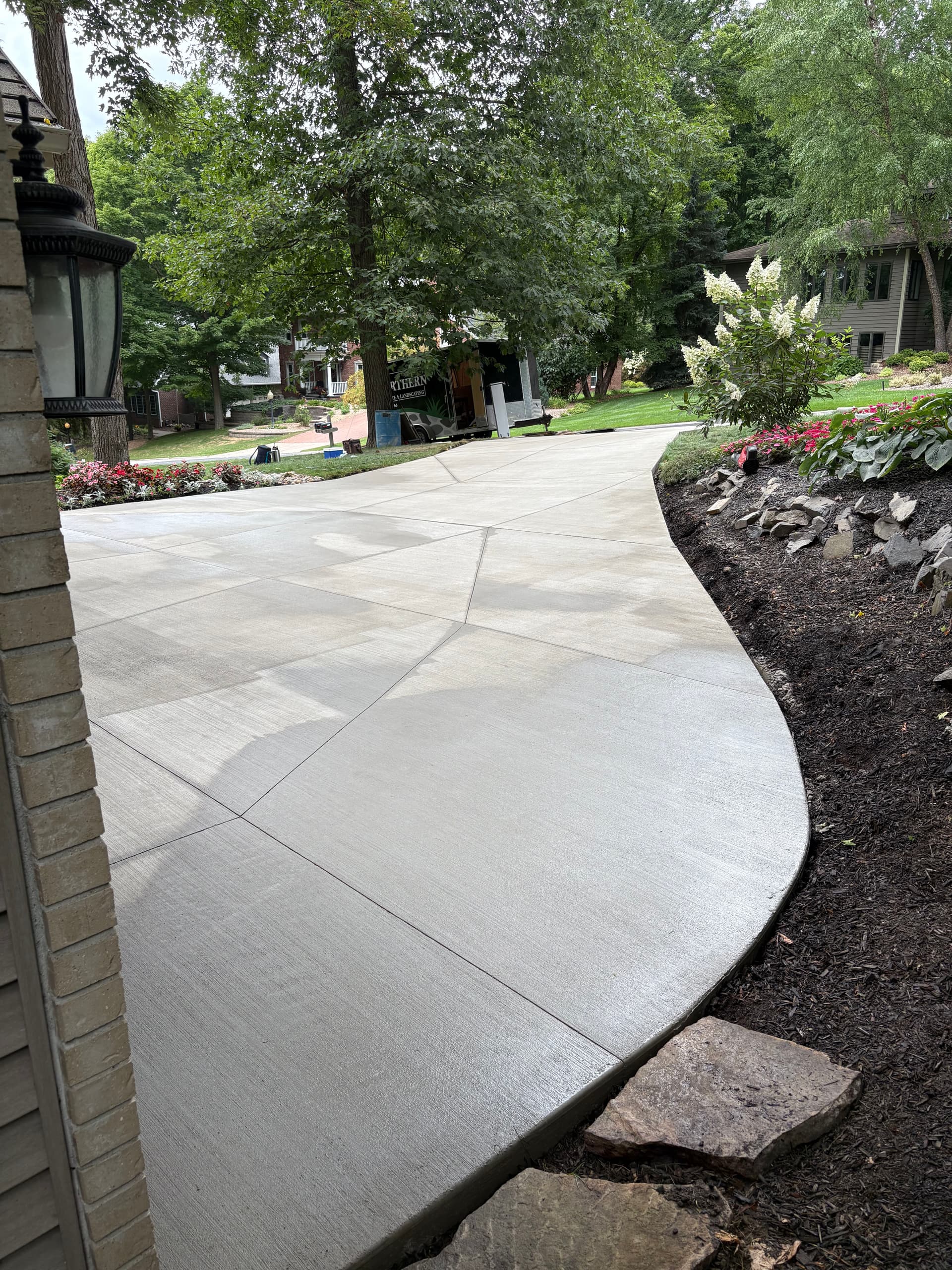
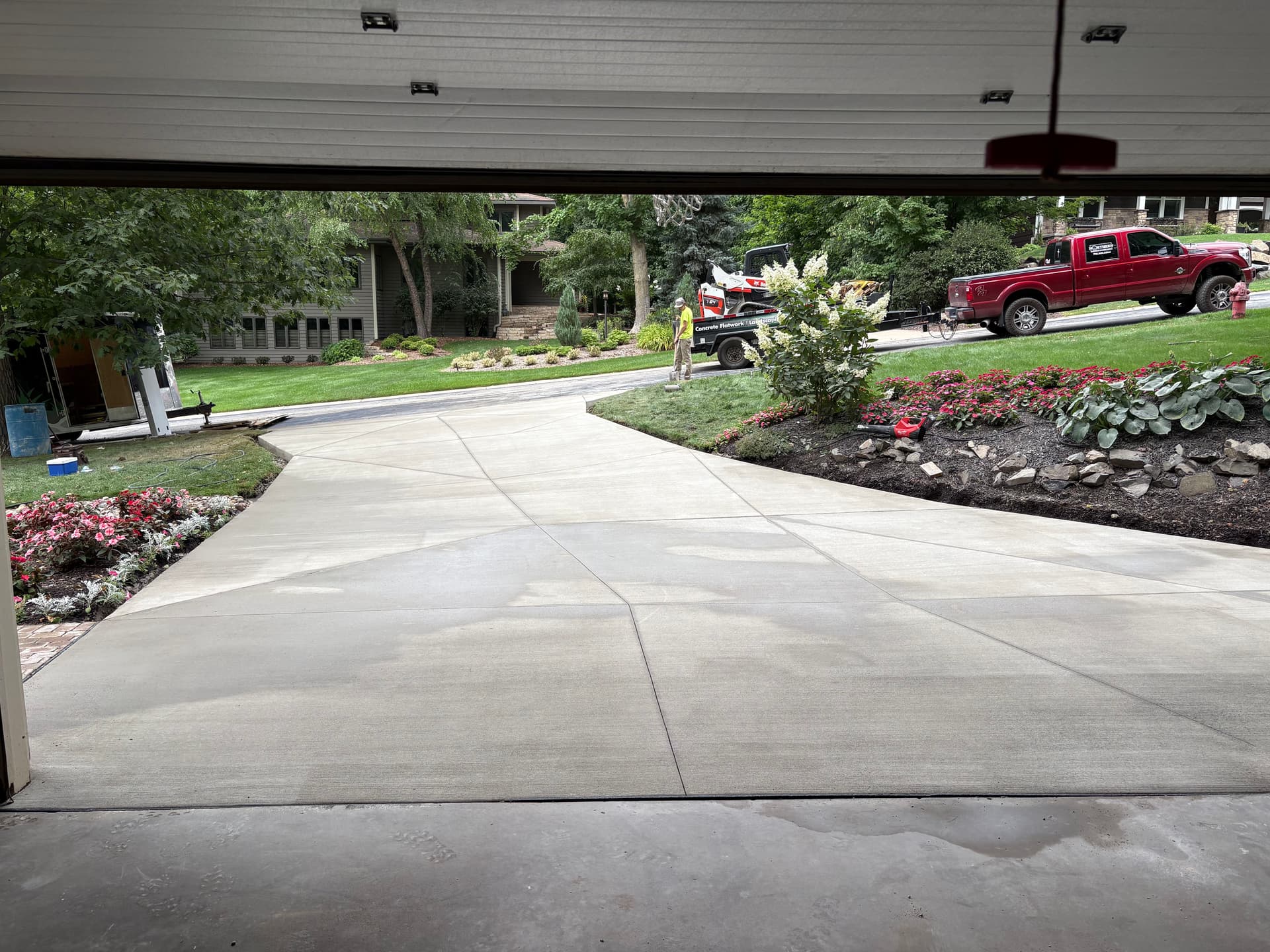
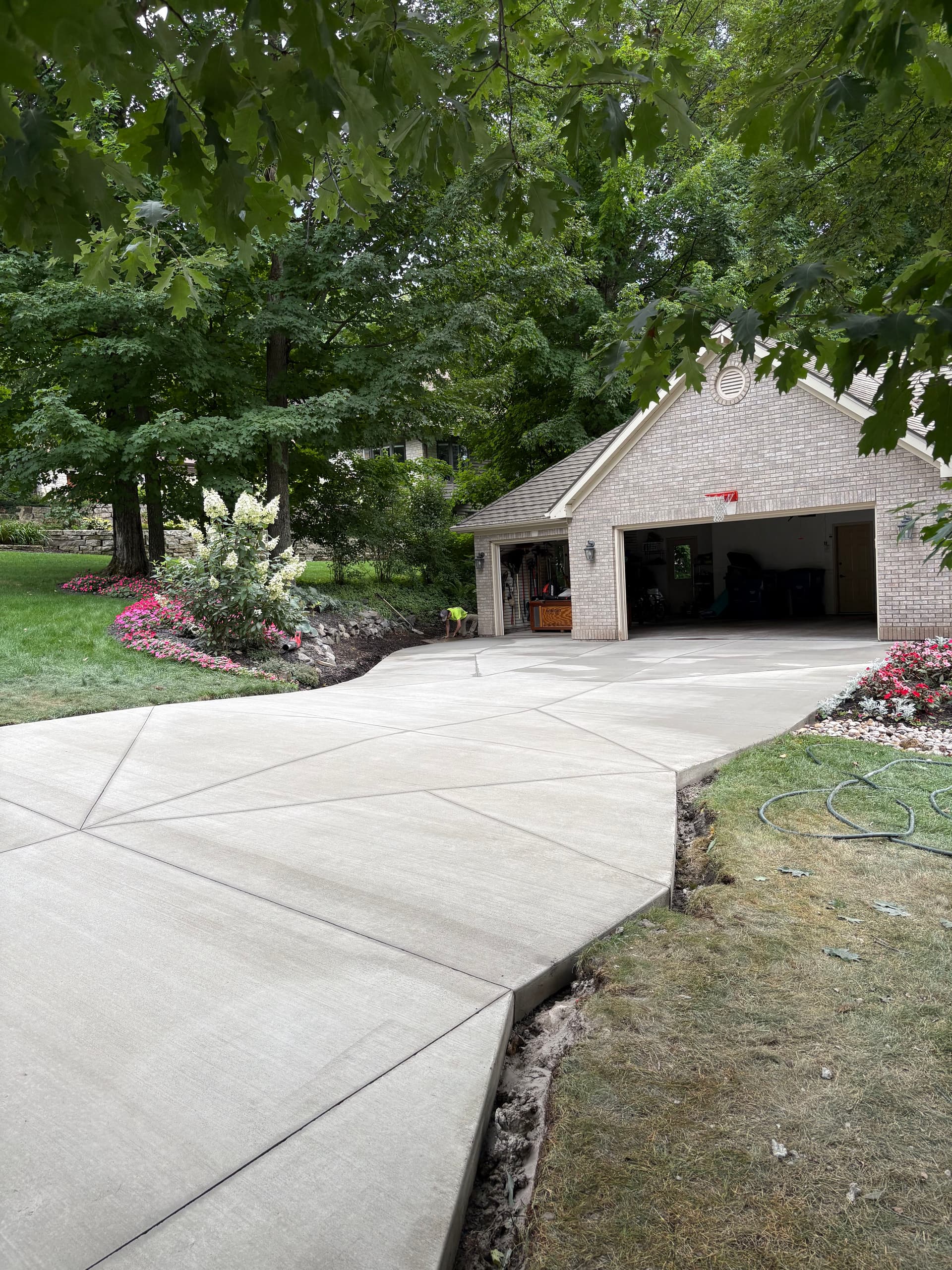
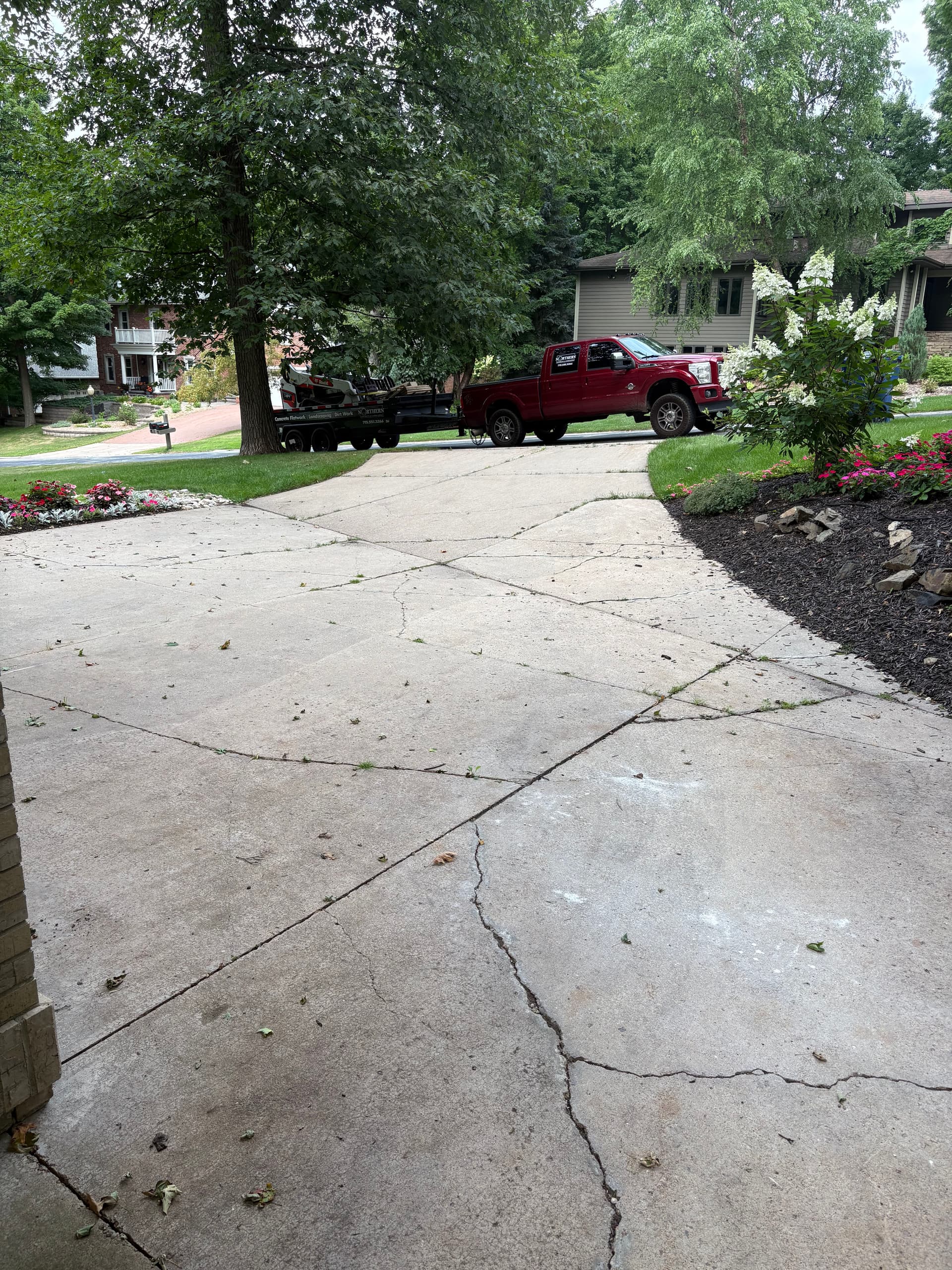
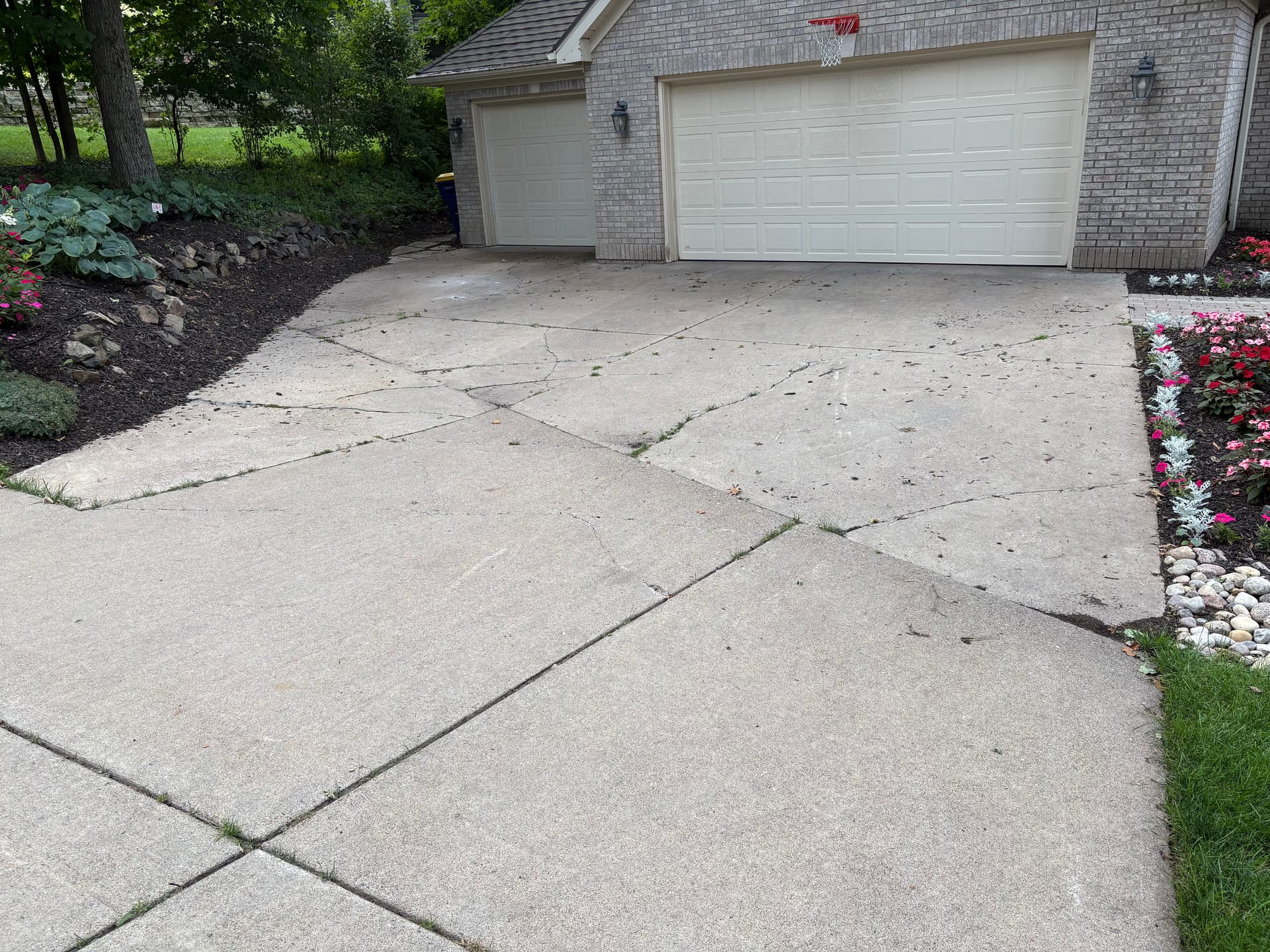
The old driveway had run its course. Cracks running in every direction, sections shifting and separating - it wasn't just an eyesore, it was a structural problem that was only going to get worse. Patching it wasn't going to cut it. The right call was a full tear-out and fresh start.
Before we ever poured a single yard of concrete, we dealt with what was underneath. The pitch wasn't right, so water wasn't draining the way it should. We regraded the base to correct that. Getting the slope right is one of those things that doesn't get talked about much, but it's the difference between a driveway that holds up for decades and one that starts failing in a few years.
We also reinforced the new slab with 1/2" fiberglass rebar throughout. Rebar isn't always standard on residential driveways, but it should be. It gives the concrete something to hold onto if the ground ever shifts, and it dramatically reduces the chance of those big structural cracks that make a driveway look like a road map. It costs more up front. It's worth it.
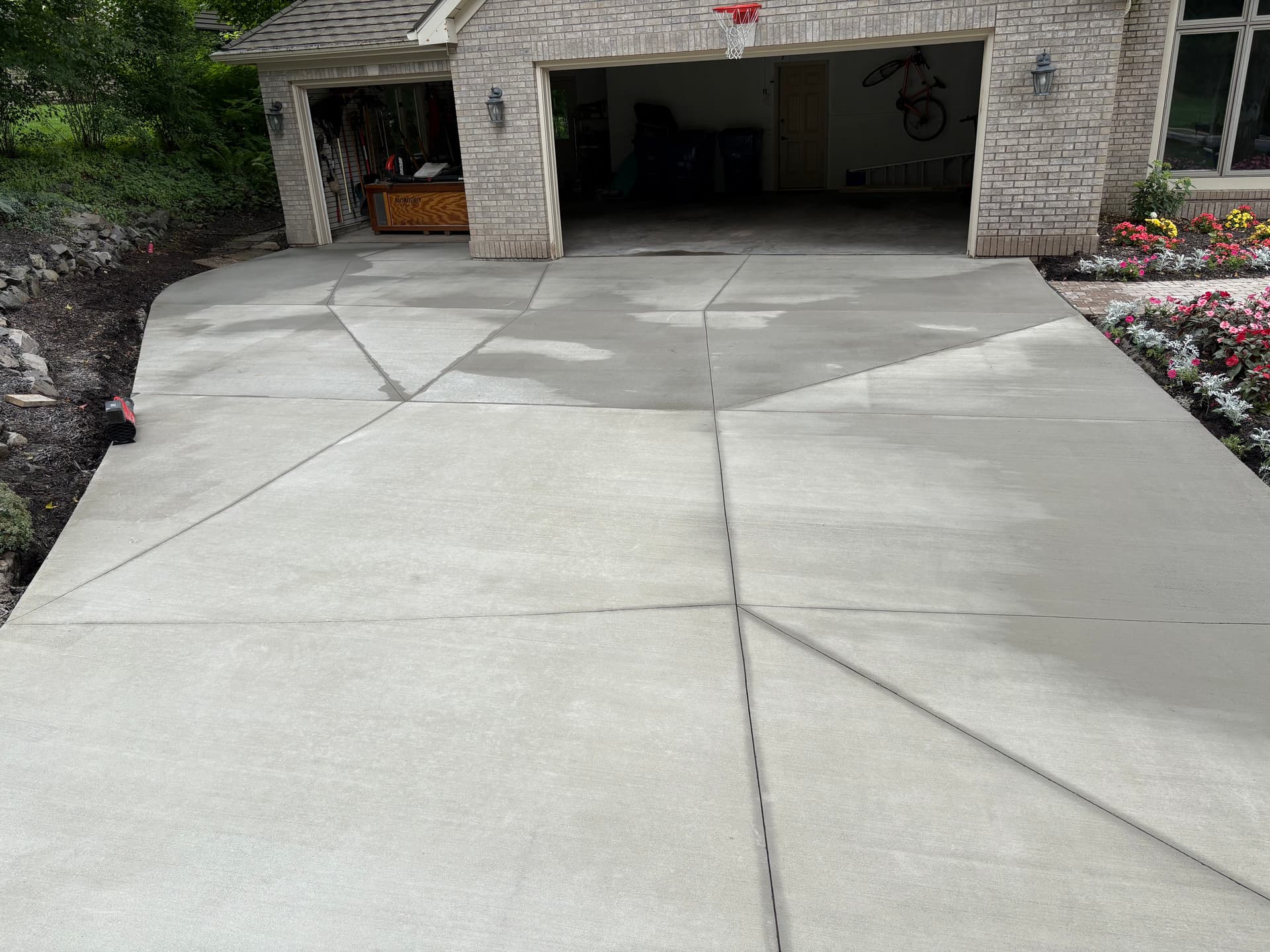
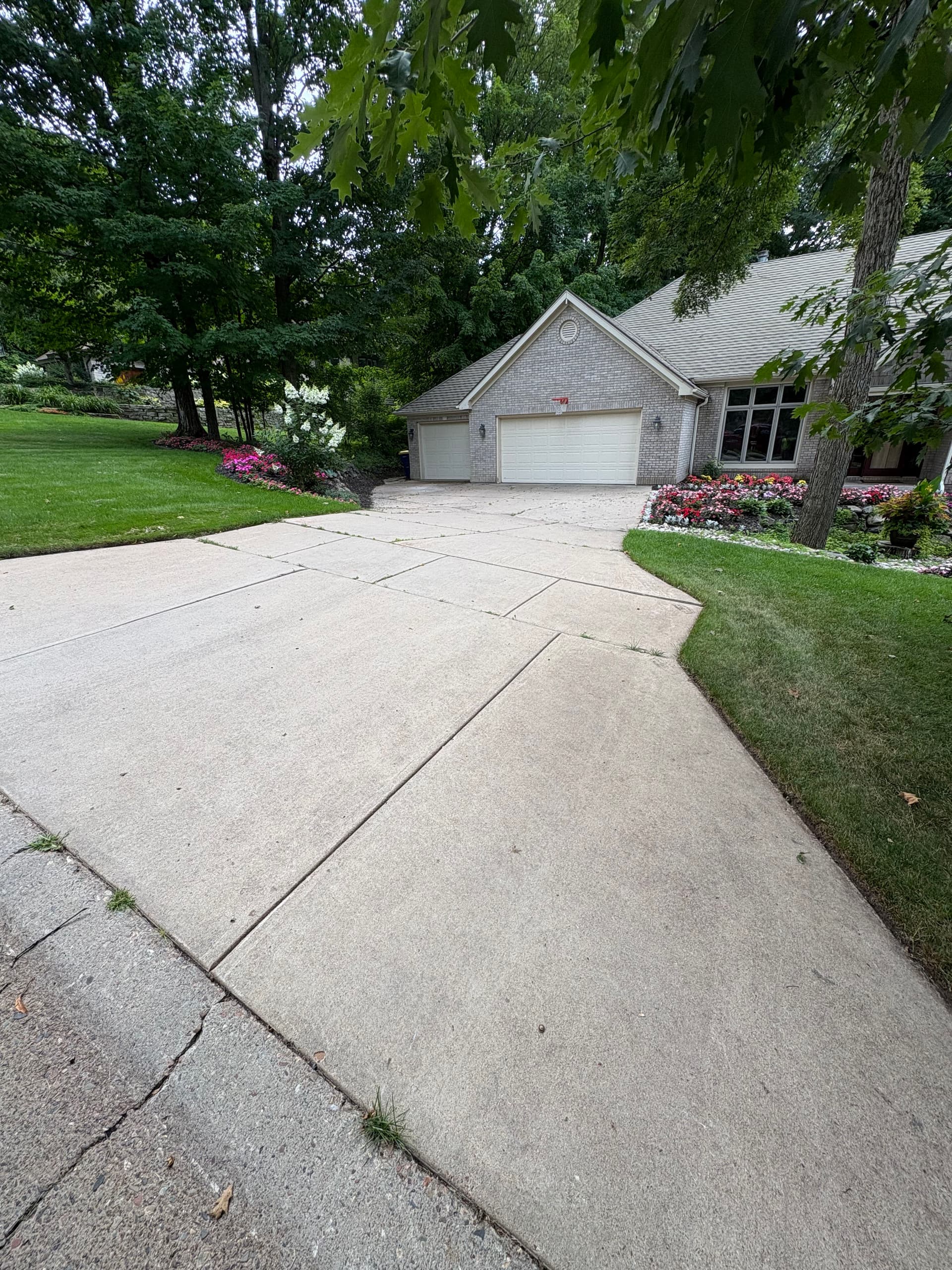
The finished surface is smooth, clean, and properly jointed - with control cuts laid out to guide any natural movement right where we want it, not randomly across the face of the slab. The curved edges follow the natural flow of the property, and the whole thing ties into the garage apron cleanly. A well-done concrete flatwork job like this doesn't just look good on day one - it holds its look year after year.
This is the kind of driveway installation work we take seriously at every step, from demo to final finish. If your driveway is cracked, heaving, or just past its prime, it's worth having someone take a real look at it before it gets worse.