Backyard Shed Pad Poured Flat and Ready to Build On
A lot of homeowners run out of storage space before they run out of stuff to store. A shed fixes that problem fast - but only if it has a solid foundation under it. A gravel base shifts. Dirt settles. Concrete stays put, and that's exactly what this homeowner needed.
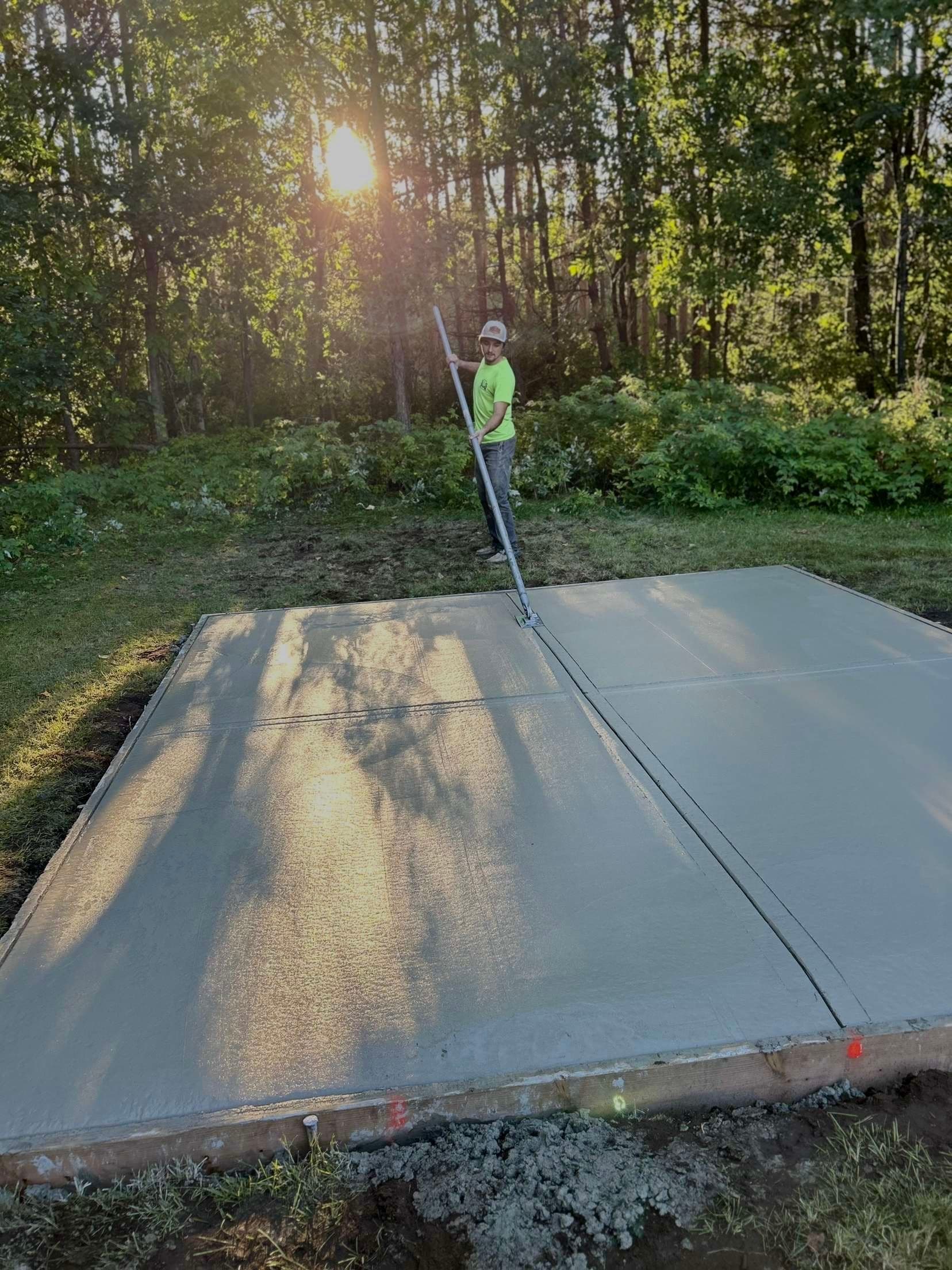
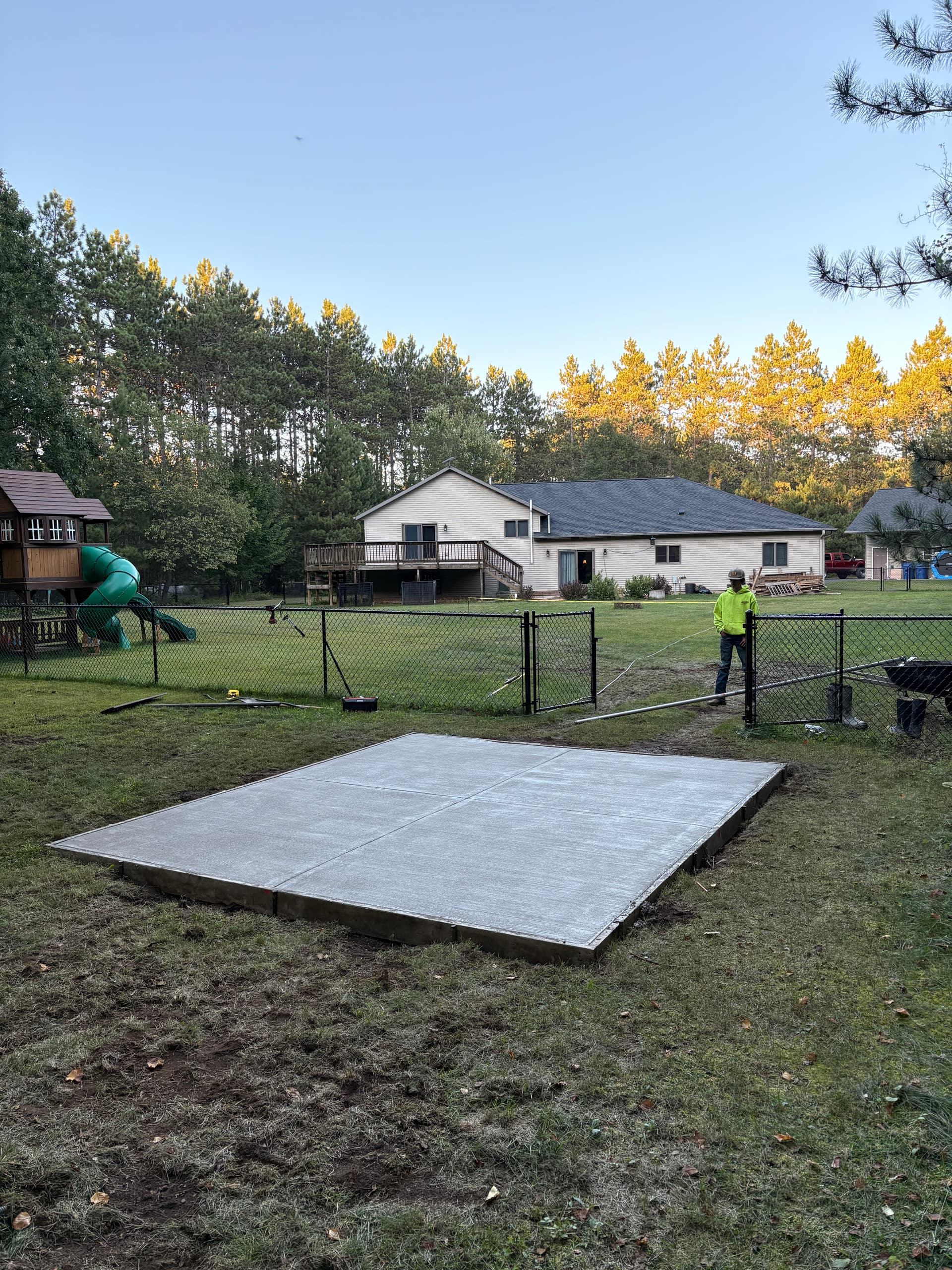
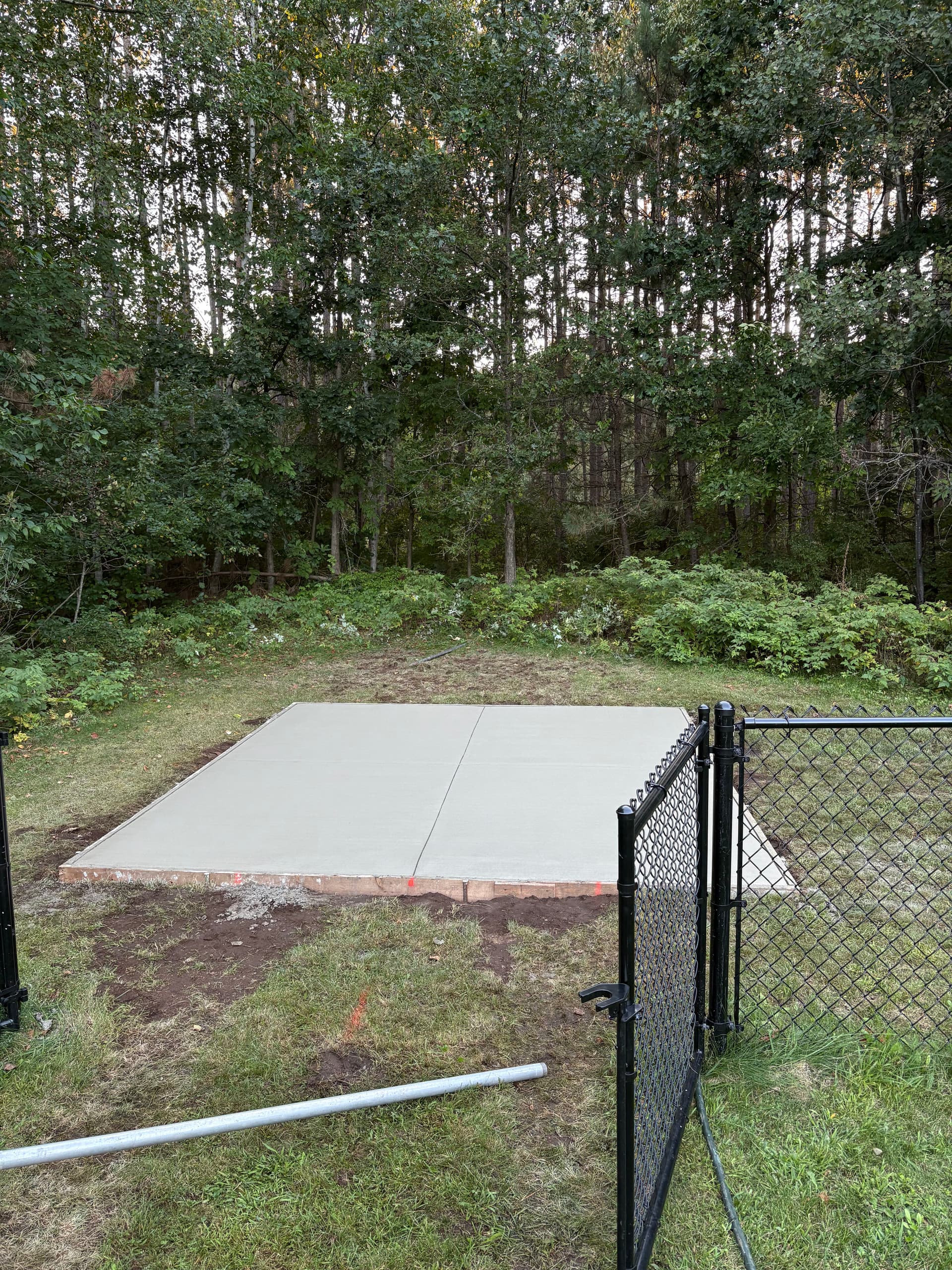
Here's what we were working with - a standard backyard setting, fenced in, with plenty of room to work. We came in, set the forms, and poured a clean concrete flatwork slab sized right for a storage shed. Nothing fancy, just solid work done right. The control joints running through the center of the pad are cut in to manage cracking over time, which matters a lot in climates that see real freeze-thaw cycles.
The finish on this slab is smooth and level - the kind of surface that makes it easy to set a shed square and anchor it down properly. We take the finishing pass seriously because a poorly finished slab causes headaches down the road. Uneven surfaces, pooling water, premature cracking - all of that comes down to how the concrete is worked before it sets.
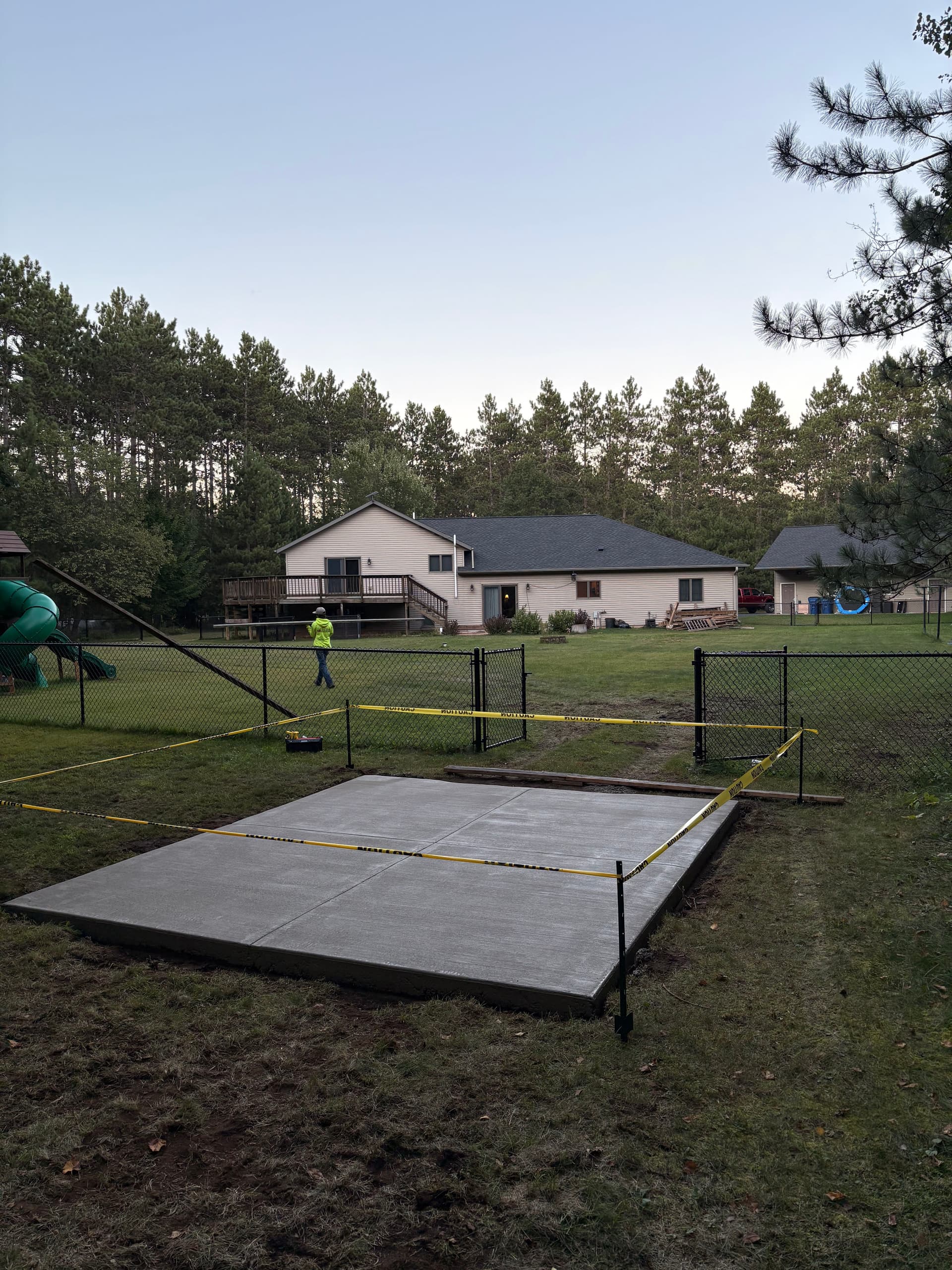
Once the concrete cured, the pad was taped off and left alone to reach full strength. That's not optional - it's just how good concrete work gets done. Rushing that step is one of the most common shortcuts that leads to surface damage and long-term problems. We don't cut those corners.
A shed pad like this is one of the most practical concrete flatwork projects a homeowner can invest in. It adds usable storage space, keeps your shed level and dry, and holds up for decades with zero maintenance. If you've been thinking about adding a shed to your backyard, the concrete foundation is the first step - and the most important one.